
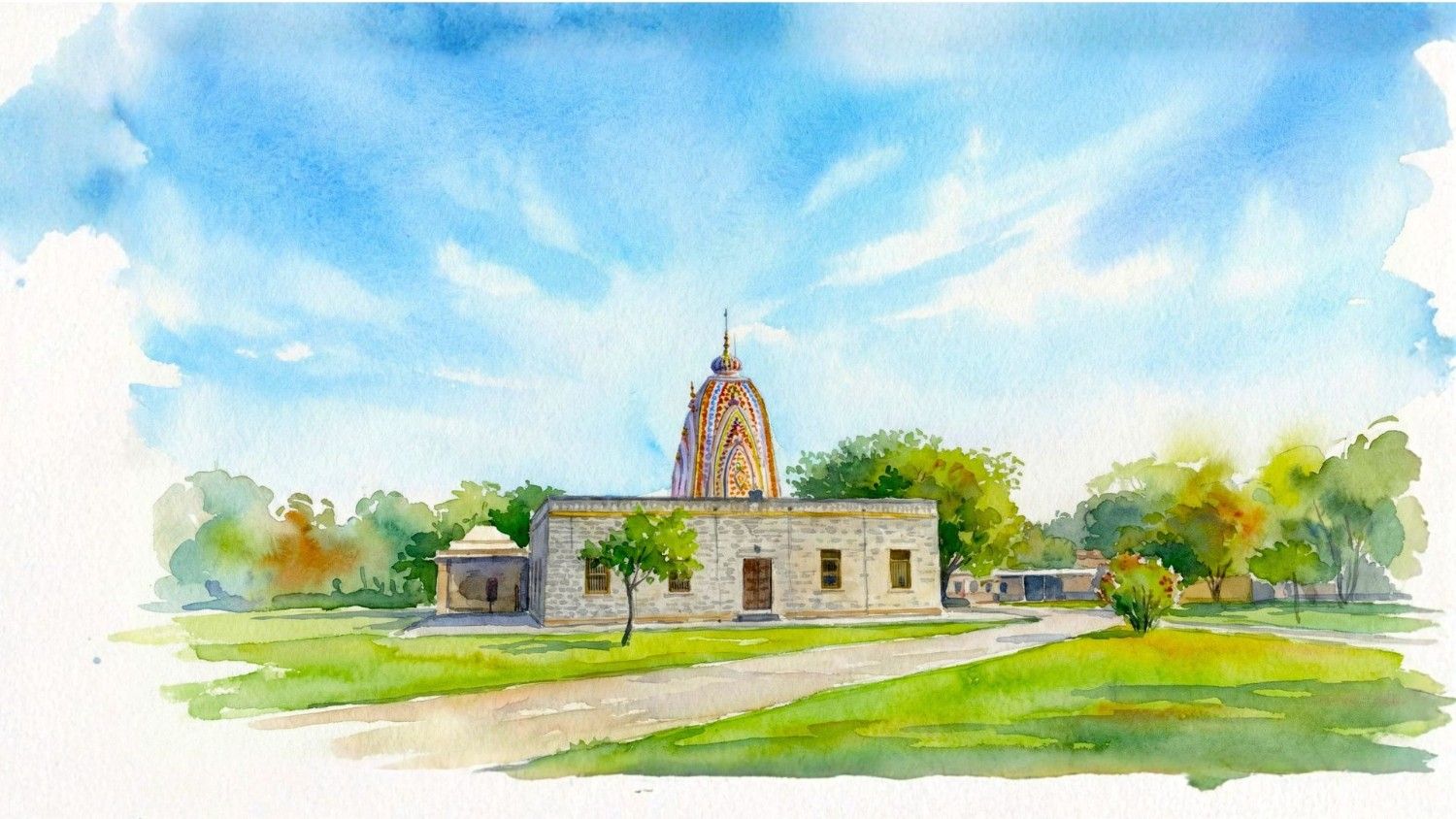
Shri Gurudev R. D. Ranade
A Brief Life Sketch
Janma (Birth)
Jamkhandi, KarnatakaJuly 3, 1886Saturday, Jyeshtha Kr 4
Anugrah (Initiation)
Jamkhandi, KarnatakaNov 25, 1901Kartik Sh 14, Vaikuntha Chaturdashi
Niryaan (Samadhi)
June 6, 1957Nimbal, KarnatakaThursday, Jyeshtha Sh 10, Gangadashami
Early Life
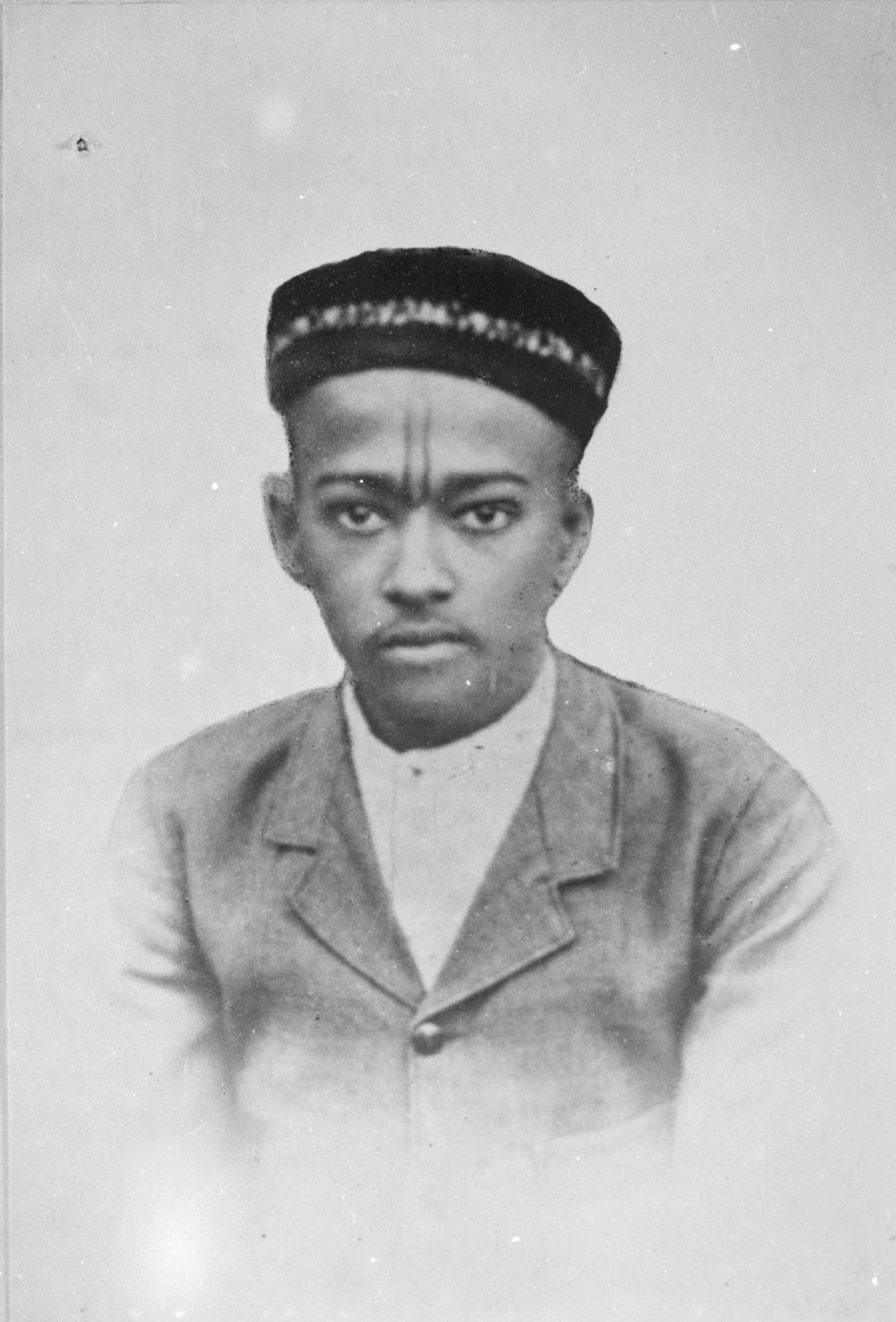
Born on July 3, 1886, at about 10 A.M., he was named Ramachandra, affectionately called Rama, because his birth was the outcome of the Grace of Shri Rameshwar. He was born into a pious and wealthy family to Dattopant and his second wife, Parvatibai. His mother, who had been childless for twelve years, engaged in constant meditation on the Divine Name under the guidance of Saint Shambhuling Swami.
When Rama was about four years old, this same Swami looked at him with a steadfast gaze and predicted that the boy was a "Scion of Grace" and a budding Saint destined to bless devotees.
Education and Intellectual Brilliance
Rama began his education in a primary school and subsequently joined the P. B. High School, where his keen intellect and retentive memory quickly won the affection of his teachers. By Standard VI, his vast reading extended to the works of Swami Vivekanand, and he was already mastering advanced Sanskrit classics.
He later stood second among all successful candidates in the Bombay University Matriculation Examination, standing first in Sanskrit and securing the coveted "Jagannath Shankarshet Scholarship". Joining the Deccan College in Poona, he was heavily influenced by intellectual stalwarts like Principal Bain and Professor Wodehouse.
His academic brilliance continued as he secured a first class first in his First Year Examination and a first class in his Intermediate Examination, winning the Varjivanadas Sanskrit Scholarship. Although he unexpectedly secured a second class in his B.A. in 1907, he won the Bhau Daji Sanskrit Prize and was appointed a Daxina Fellow.
At the M.A. Examination of the Bombay University in 1914, when he stood first and got the Chancellor's Medal, one of the examiners have written on his answerbook that the “Examinee knows more than the examiner”.
He passed his M.A. in 1914 with a First Class First in Philosophy, earning both the Chancellor's Gold Medal and the Telang Gold Medal.
Principal Bain pronounced prophetic words about Prof. R. D. Ranade: “You are one of the six greatest men of the world.”
Spiritual Initiation and Experiences
On November 25, 1901, which was the auspicious day of Vaikuntha Chaturdashi, Rama was initiated with the Divine Nama by Shri Bhausaheb Maharaj, the celebrated Saint of Umadi. His intense, regular meditation soon yielded brilliant spiritual experiences, including visions of a Divine Star, a Spiritual Sun, and the wonderful Spiritual Shesha-Serpent.
To ascertain the veracity and value of these experiences, he swiftly read through Swami Vivekanand's Raja Yoga and was even introduced to Dr. Annie Besant in Banaras by Prof. Wodehouse. Upon seeing his Master's photograph, Dr. Besant assured Rambhau that he was "in safe hands," which deeply verified his path.
Hardships and Trials
Throughout his life, Rambhau faced a veritable chain of severe calamities. In 1909, he suffered from a dangerous T.B. of the brain cells, recovering only through intense meditation and his Master's assurance that he need fear no death for sixty years in order to carry out a great mission. Later, he contracted an even more deadly T.B. of the lungs that reduced him to a skeleton, but he was cured at Inchegiri through his Master's grace.
Personal tragedies also struck; he had married his first wife, Sitabai, in 1901, and their son, born in February 1916, passed away before completing ten months. Shortly after, the terrible influenza epidemic of 1918 carried away both his wife and his revered mother within a span of 2 months.
Adding to his trials, his newly built bungalow in Poona, "Adhyatma Bhavan", toppled down due to torrential rain in 1919 and had to be completely reconstructed. Professionally, sharp differences of opinion and the flames of jealousy among his colleagues forced him to resign his life-membership from the D.E. Society in June 1924.
Professional Career and Literary Masterpieces
Rambhau's professional journey began as a lecturer in English Composition at Fergusson College, but after completing his M.A., he transitioned to teaching Philosophy. His immense scholarship led him to join the Allahabad University as the Head of the Department of Philosophy in December 1927. Over the years, he rose to become the Dean of the Faculty of Arts and finally the Vice-Chancellor in 1945. Following his retirement in 1946, the University created an honorary post for him and later conferred a D.Litt degree upon him in 1947 to recognize his unparalleled intellectual eminence.
Parallel to his academic roles, he opened the Academy of Philosophy and Religion in Poona in 1924 to encourage research in all the philosophies and religions of the world. Later, in 1947, he established the Adhyatma Vidya Mandir at Sangli, aiming to work for the spiritual unity of mankind. As an author, he published monumental volumes, including "A Constructive Survey of Upanishadic Philosophy" in 1926 and "Pathway to God in Marathi Literature" in 1933. He subsequently released "Pathway to God in Hindi Literature" in 1954, while works on Kannada Saints, the Bhagavadgita, and Vedanta (Brahma-Sutras) were published posthumously by his disciples.
Masterhood
Acting upon a direct command from his Master received in a vision, he agreed to marry a second time and wed Manutai (who was given the new name Sitabai) on June 1, 1922. The couple had a daughter, Shakuntala, in January 1925, and though a second son was born in December 1940, the child tragically passed away in April 1941.
In April 1925, he occupied a newly built house in Nimbal, establishing an Ashram that quickly became an abode of bliss and peace for all spiritual aspirants. Assuming the role of a spiritual Master, Shri Gurudev preferred an indirect method of guidance, imparting the Divine Name through two of his spiritual brothers because he disliked the flare and glare of "Gurudom". He shunned formal sermons; instead, he guided and trained modern seekers through common meditation functions and by delivering informal, highly inspiring talks during casual "Sittings".
Final Years and Mahasamadhi
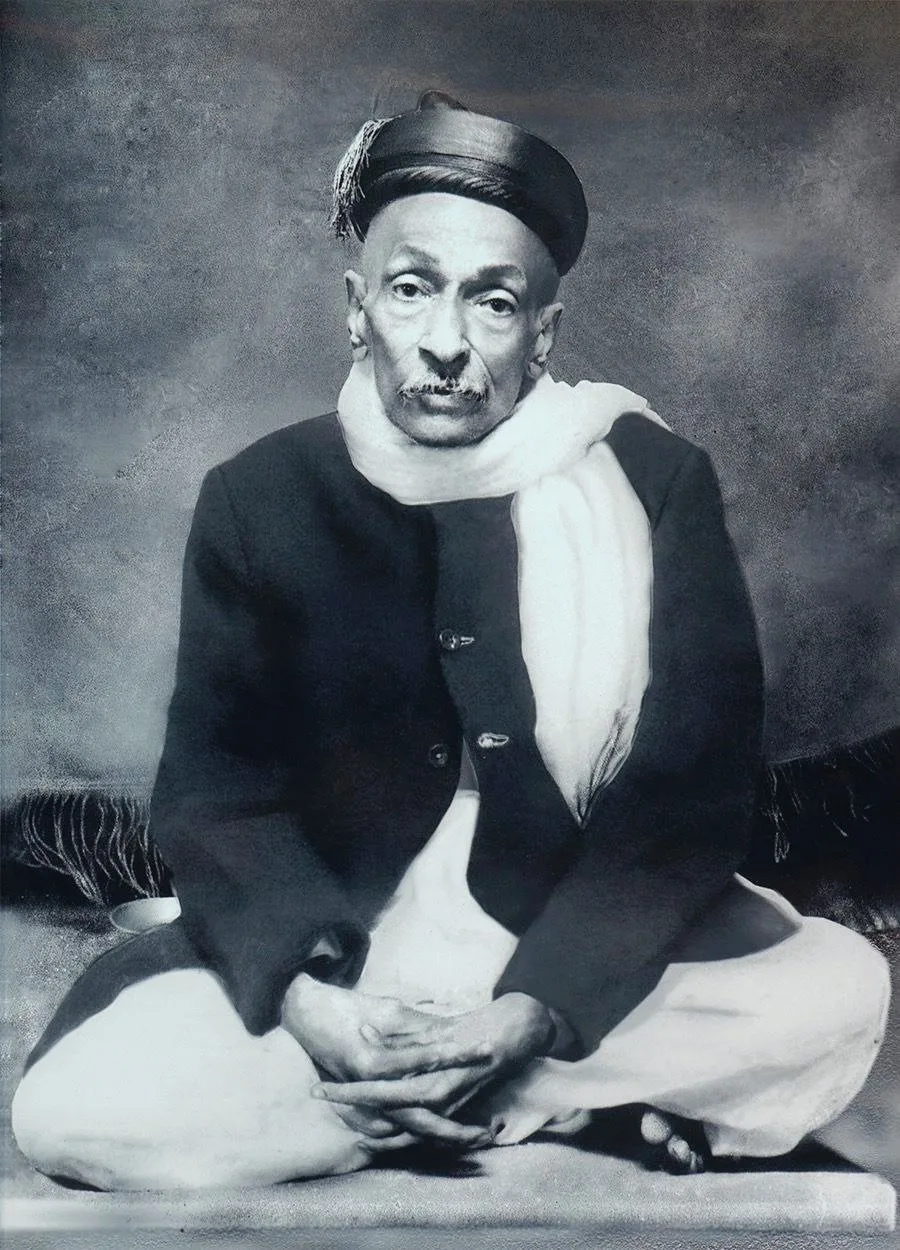
Shri Gurudev completed his 70th year on July 3, 1956, an occasion marked by his disciples celebrating his Nectar Jubilee (Amrut Mahotsav) on a grand scale in Jamkhandi. His health, however, began to decline the following year; in March 1957, a terrible storm in Allahabad left him with a severe cough that interrupted his ability to meditate properly. Consequently, he returned to Nimbal on March 26.
On Thursday, June 6, 1957, his last day on earth, he spent about two hours in meditation before taking to his bed. By 4 P.M. that evening, he intimated his impending departure to his attendants using signs. Later that night, at about 10:30 P.M., precisely as the camphor flame of the Arati expired during the Bhajan, the flame of Shri Gurudev's soul left his frail body and merged eternally in the Lord.
Book Ref: Shri Gurudev Dr. R.D. Ranade: Glimpses of Ideal Life
Author: M. S. Deshpande